Info & Advice

Photo © Ray Hamilton

Scientific & Technical Reports

Presentations from Vanishing Viper, October 2016

Presentations from The Vanishing Viper: Priorities for Adder Conservation, national adder meeting held in Draycott, Somerset on 8-9th October 2016.

Vanishing Viper 2019: A European approach to developing an adder conservation strategy

Vanishing Viper 2019: A European approach to developing an adder conservation strategy, University of Bangor, 8-9 June 2019


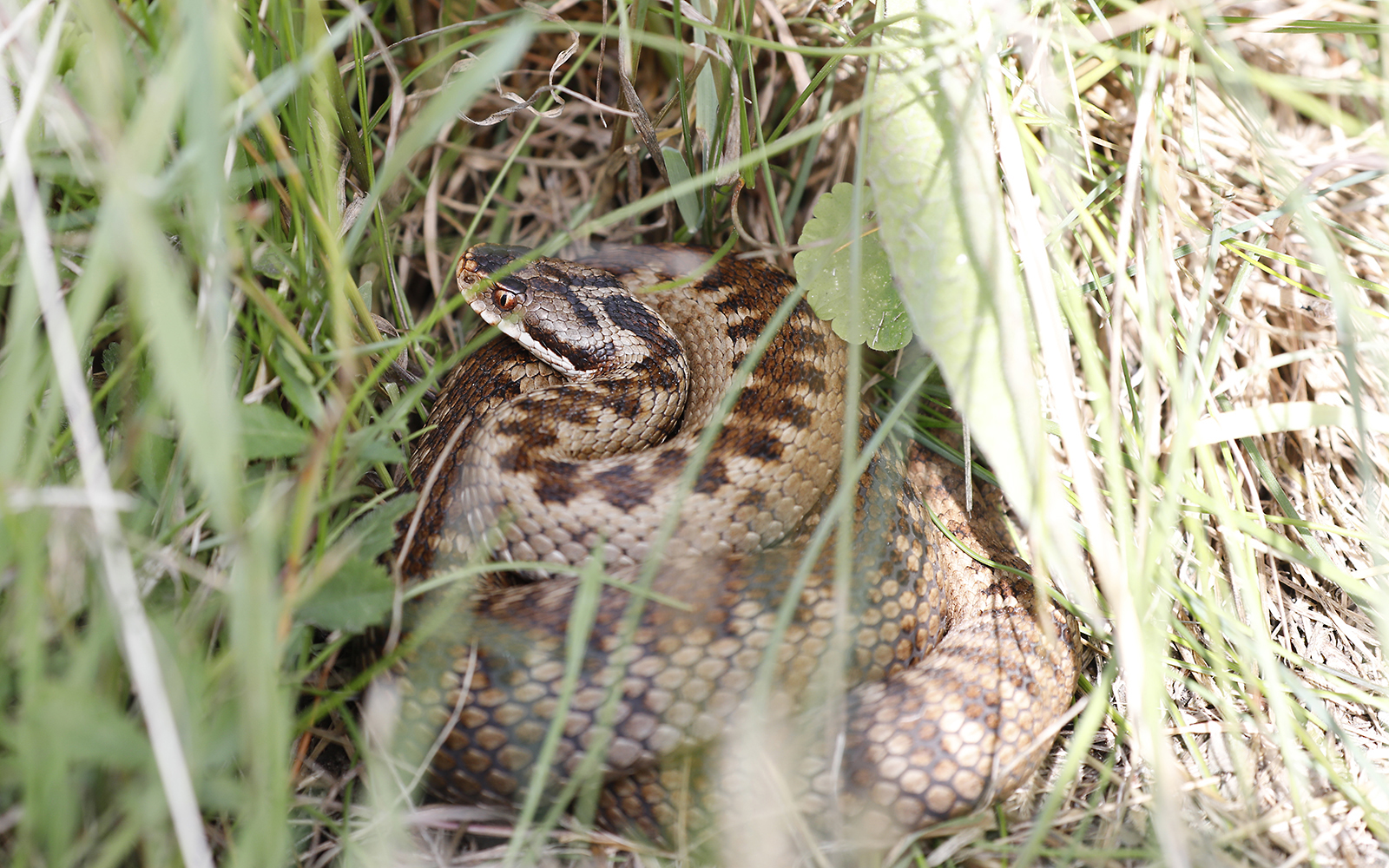
Vanishing Viper 2019’ was organised in the wake of continuing evidence for declines in British populations of the northern viper or adder (Vipera berus).  The meeting included participants from other European countries, whose insights suggest that the drivers of adder declines in mainland Europe are similar to those in Britain.  Consequently, we stand to benefit from their knowledge and experience.  It was concluded that if adder declines continue at the present pace, then Britain may be left with a few large, flourishing populations, but that many of the smaller populations will be lost as appears to have happened in Belgium, France, Germany and The Netherlands.  The meeting considered a range of conservation actions including improvements to habitat management, the creation of adder ‘ARKs’, population restoration by genetic or demographic enhancements, community level promotion and outreach, and opportunities for new policy-driven environmental schemes.
pdf Amphibian disease alert - B. salamandrivorans Popular

5954 downloads

Download (pdf, 360 KB)

Amphibian-disease-alert_- B sal_June-2015.pdf


pdf Amphibiocystidium Parasitic Disease Popular

8226 downloads

Download (pdf, 500 KB)

Amphibian-Amphybiocystidium-factsheet_GWH (1).pdf


pdf Apparent absence of Batrachochytrium salamandrivorans in wild urodeles in the United Kingdom Popular

2866 downloads

Download (pdf, 1003 KB)

Cunningham_Bsal UK survey_Sci Rep_2019.pdf

pdf Commercial constultancy work: guidelines on ARG involvement Popular

6983 downloads

Download (pdf, 209 KB)

HGBI Guidance on Consultancy.pdf

Published by Herpetofauna Groups of Britain and Ireland (HGBI)

document District Level Licensing for Great Crested Newts in Kent - KRAG Position Statement February 2019.docx Popular

2407 downloads

Download (docx, 37 KB)

District Level Licensing for Great Crested Newts in Kent - KRAG Position Statement February 2019.docx

pdf Evaluating local mitigation/translocation: best practice and lawful standards Popular

35651 downloads

Download (pdf, 1.32 MB)

HGBI Best Practice and Lawful Standards.pdf

Published by Herpetofauna Groups of Britain and Ireland (HGBI)

pdf Experience in Great Crested Newt Mitigation: Guidance for Ecologists Popular

4933 downloads

A Publication to download from the Nature England Website

pdf Fixing Enkamat to Gully pots – Initial findings in Sussex Popular

7568 downloads

Download (pdf, 909 KB)

Fixing Enkamat to Gully pots Initial findings in Sussex.pdf


pdf Gardener et al Make the Adder Count - population trends from a citizen science survey of UK adders.pdf Popular

3198 downloads

Download (pdf, 2.19 MB)

Gardener et al Make the Adder Count - population trends from a citizen science survey of UK adders.pdf

spreadsheet GCN HSI calculator (ARGUK) Popular

36040 downloads

Download (xlsx, 11 KB)

ARGUK GCN HSI.xlsx


pdf Guidance on references for applicants and referees: Science and Conservation Licensing Popular

4819 downloads

Download from the Natural England website.

pdf Gully pots death traps for amphibians, RAVON Report (2012) Popular

11037 downloads

Download (pdf, 9.70 MB)

RAVON Report.pdf


default Herpetofauna Workers' Manual Popular

7441 downloads

Edited by Tony Gent and Steve Gibson, published by JNCC in 1998 and revised in 2003.  Out of print, so now available only as pdf downloads.  Some of the information is now out of date, but this still contains a lot of useful information for herp workers.

pdf The Vanishing Viper: priorities for adder conservation Popular

3046 downloads

Download (pdf, 379 KB)

The Vanishing Viper - priorities for adder conservation.pdf